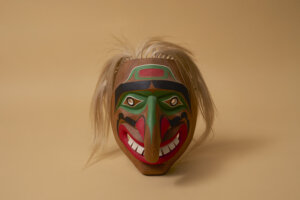
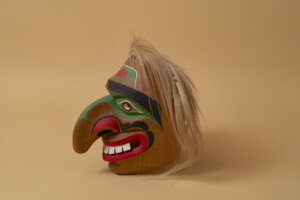
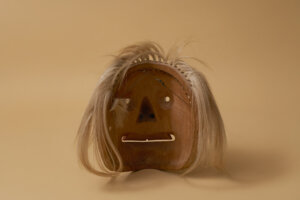
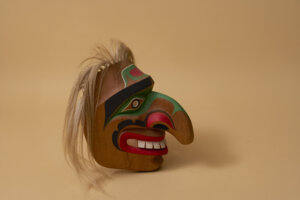



Created in 1992 by a Native American maker, this work embodies the powerful spirit of vernacular craft in which a means of livelihood is elevated into expressive form. Carved from wood into an organic, hand-shaped volume, the surface is animated with vivid reds, greens, and blacks. The exaggerated nose and mouth, along with the neatly aligned white teeth, lend the face a presence that is at once humorous and quietly animistic. Seen from the side and back, the honest tool marks and warmth of the material remain visible, allowing the viewer to sense the rhythm of the maker’s hand and the time embedded in the carving.
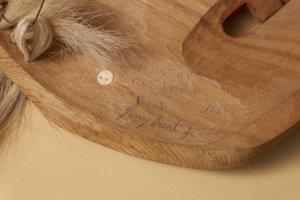
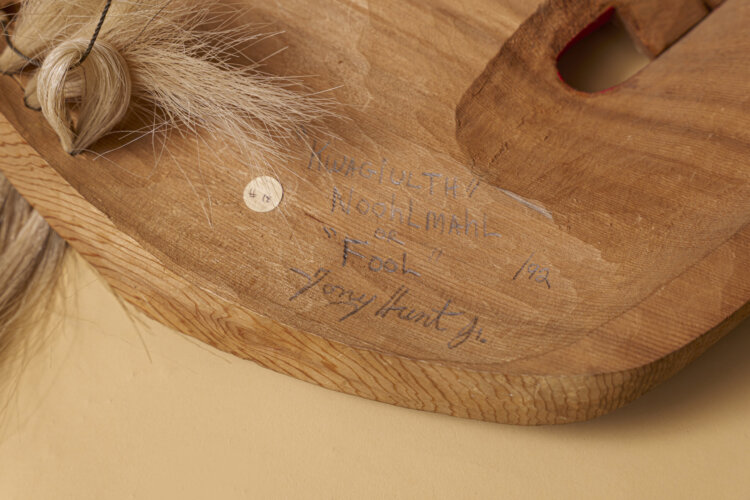
The hair-like material attached to the head functions not merely as decoration but as a signifier of identity and ceremonial character, giving the object a personality that surpasses that of a simple artifact. A signature and date inscribed on the underside testify that this is a singular piece rooted in the artist’s lived context. Within Native American traditions—where the boundaries between utility and art often dissolve—this mask-like carving stands as a compelling example of how acts of making for survival and aesthetic consciousness are inseparable.
1992年にネイティブアメリカンの作り手によって生み出されたこの作品は、生活の糧を得るための手仕事がそのまま造形表現へと昇華した、力強い民芸的精神を宿している。木を削り出した有機的なフォルムに、鮮やかな赤や緑、黒の彩色が施され、誇張された鼻や口元、白く並んだ歯の表情がどこかユーモラスでありながら精霊的な気配を漂わせる。側面や背面から見ると、素朴な彫り跡や素材の温もりがそのまま残されており、鑑賞者は作者の手の動きや制作の時間を想像することができる。
また、頭部にあしらわれた毛髪のような素材は、装飾であると同時に儀礼性や人格性を象徴する要素として機能し、単なる工芸品を超えた存在感を放っている。台座裏に記されたサインや年記は、この作品が個人の生活と文化的背景の中から生まれた一点物であることを静かに物語る。日用品と芸術の境界が溶け合うネイティブアメリカンの創作文化において、本作は生きるための行為と美の意識が不可分であることを示す象徴的な造形といえるだろう。